
In this guide
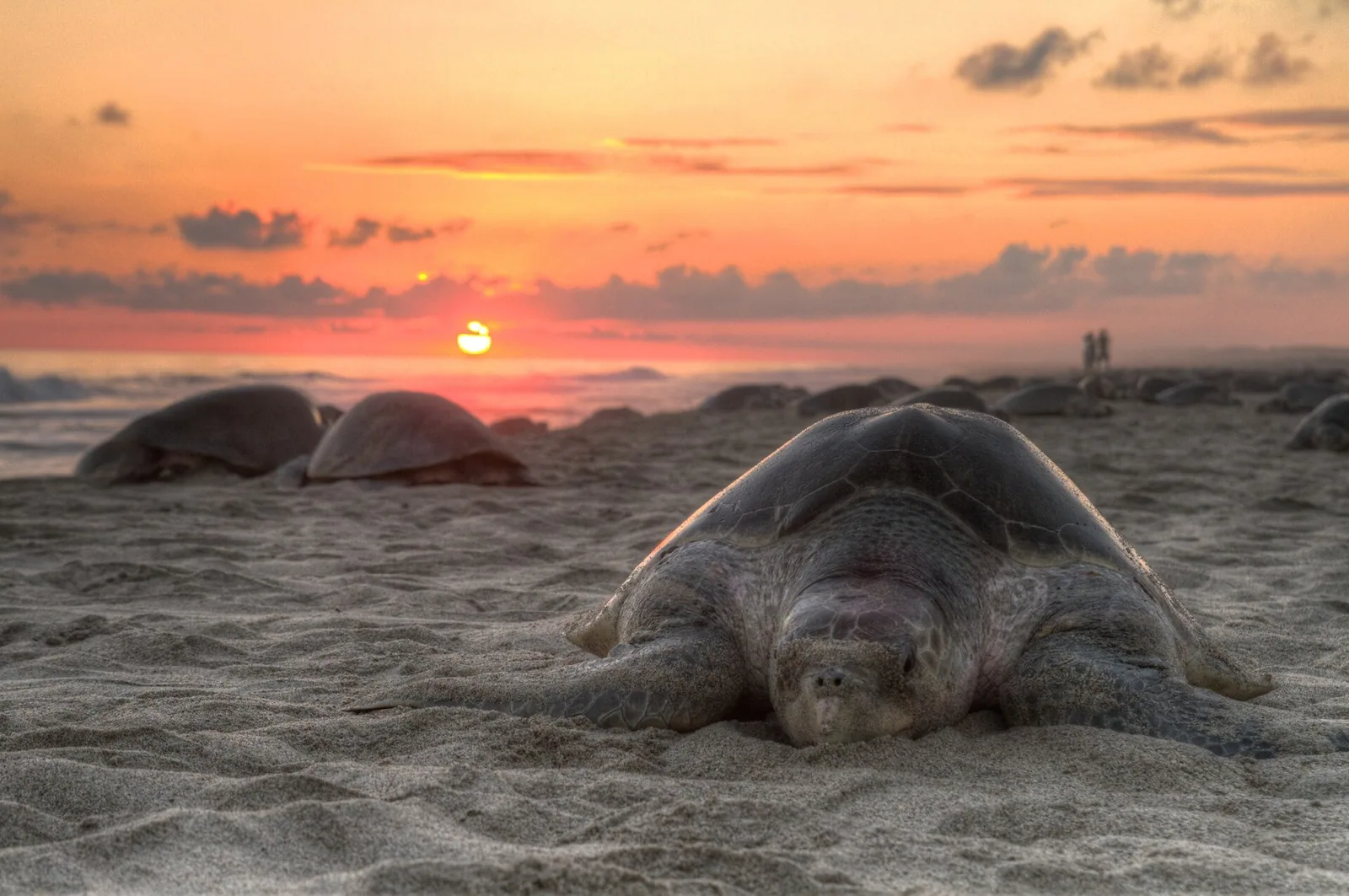
Olive ridley turtles, called paslama in Nicaragua (Lepidochelys olivacea), nest at the La Flor Wildlife Refuge in the municipality of San Juan del Sur from July to January, according to MARENA. Several times each season thousands of females come ashore together in an arribada. Monkeys Travels & Tours runs a private night visit from San Juan del Sur or Rivas and confirms with the rangers before leaving.
When the season runs
MARENA, the environment ministry, gives the season as July to January, as reported by 100% Noticias. Within those months the big arrivals cluster in the second half of the year. The table below lists the arribadas we can document with a published figure and date.
| Date | What was reported | Source |
|---|---|---|
| 26 October 2024 | First arribada of that season, 12,321 females | MARENA |
| 1 January 2025 | Third arribada of the season, 3,495 females | MARENA; also cited by La Prensa |
| August 2025 | about 6,000 females | La Prensa |
| Early September 2025 | 5,771 females over four days, second arribada of the season | MARENA |
| December 2025 | 36,647 females in seven days | La Prensa |
| From 1 October 2026 | 32,949 females, sixth arribada of 2026 | La Prensa, 13 October 2026 |
Two patterns stand out. First, counts vary enormously, from a few thousand to more than thirty thousand. Second, the largest events in this record fell in October and December. That is useful for planning a trip, but it is not a forecast.
What an arribada is
Arribada is Spanish for arrival. The word describes the synchronized nesting of olive ridleys: over a few nights, a large part of the local population comes ashore on the same stretch of beach to dig nests and lay eggs. The September 2025 event at La Flor lasted four days, according to MARENA; the December 2025 event lasted seven, according to La Prensa.
Between arribadas, single females still nest on most nights of the season. A visit outside an arribada can mean a handful of turtles, or none.
Why nobody can promise you an arribada
Arribadas cannot be predicted to the day. MARENA announces them once they have started, which is why the dates above are reported, not scheduled. Any operator who sells a guaranteed arribada is selling something they do not control.
What we do instead: before every departure we contact the park rangers at La Flor and ask whether turtles are on the beach that night. If the answer is yes, we go. If the answer is no, we tell you before you leave your hotel and you choose: go anyway for solitary nesters and a night on a protected beach, move the date, or cancel. Cancellation with Monkeys is free up to 48 hours before departure, and a same-day change because the rangers report nothing is handled by WhatsApp at +505 8506 1173.
What the night visit is like
The tour is an evening departure from San Juan del Sur or Rivas. You arrive at the refuge after dark, pay the entrance (included in the Monkeys price) and receive a briefing from the rangers. Then you walk the beach with the ranger and your guide, in the dark, until you reach nesting turtles.
During arribadas the refuge is guarded by the National Police, the Army and the rangers, as MARENA reported in September 2025. The same report counted 69 tourists attended during that four-day nesting. The refuge also runs hatcheries: in September 2025, 47 nests with 4,398 eggs were moved to nurseries; La Prensa reported 108 nests and 10,333 eggs protected during the October 2026 arribada, and the release of 488 hatchlings at Chacocente.
Expect sand, wind and no artificial light. The walk is on soft sand and can be long depending on where the turtles are. Children who can walk a beach at night and stay quiet are welcome.
Rules on the beach
The rangers set the rules and our guide repeats them before you step onto the sand. They are indications, not suggestions.
- No white light. No flash, no headlamps on white mode, no phone screens pointed at the animals. Red light only, and only when the ranger allows it.
- Keep the distance the ranger indicates. Never stand in front of a turtle, and never between a turtle and the sea.
- Stay quiet. Voices carry on the beach.
- Do not touch turtles, eggs or hatchlings.
- Stay with the ranger and the group. Do not walk the beach on your own.
- Take nothing from the beach. Leave nothing on it.
Breaking these rules can end the visit for the whole group. We would rather tell you now.
Chacocente as an alternative
The Río Escalante-Chacocente Wildlife Refuge, north along the coast, was created by Decree 1294 of 1983 to protect olive ridley nesting beaches. It covers about 4,645 hectares across Santa Teresa and Jinotepe, in Carazo, and Tola, in Rivas, according to its MARENA management plan.
Monkeys runs a private Chacocente Sea Turtle Night Tour from US$50 per person (groups of 4 to 6); US$85 solo. We suggest it when La Flor is closed or when the rangers there report nothing. The same rules apply.
How to get there with Monkeys
The La Flor Sea Turtle Night Tour is an evening tour with pickup in San Juan del Sur or Rivas. Price: from US$45 per person (groups of 4 to 6); US$80 solo. Included: private guide, transport from Rivas or San Juan del Sur, refuge entrance and water. Not included: dinner, tips and travel insurance. Eat before departure or bring food.
What to bring: closed shoes or sandals with a strap, a light jacket or long sleeves for the wind, insect repellent, a red-light torch if you have one, and patience. Leave the camera flash at the hotel.
What Monkeys does
Monkeys Travels & Tours is a private tour operator based in Rivas, founded in 2018 by Everth Palma, who was born and raised in Rivas.
- We confirm with the La Flor rangers before each departure and tell you what they said. We do not guarantee sightings.
- Private vehicle, your group only.
- A bilingual guide born in Rivas who repeats the ranger rules before the beach walk.
- Entrance fee included and paid by us.
- Our catalog lists the La Flor night tour as seasonal from August to December and the Chacocente tour from August to January; outside those months we tell you so before you book.
- WhatsApp contact during the tour, with answers in under an hour every day from 7:00 to 20:00.
- Written confirmation of the price and what is included, and free cancellation up to 48 hours before.
Questions we get every week
When is turtle season at La Flor?
From July to January, according to MARENA as cited by 100% Noticias. The largest documented arrivals in recent seasons happened in October and December: 32,949 females from 1 October 2026 and 36,647 females over seven days in December 2025, both reported by La Prensa. Solitary nesting continues between arribadas.
Can Monkeys guarantee that I will see an arribada?
No. Arribadas cannot be predicted to the day. Before each departure we confirm with the park rangers whether turtles are on the beach. If they report nothing, we tell you before you leave and you decide whether to go for solitary nesters or move the date. Cancellation is free up to 48 hours before.
What are the rules for watching turtles at La Flor?
The rangers set them and our guide repeats them: no white light, no flash and no phone screens pointed at the animals; keep the distance the ranger indicates and never stand in front of a turtle; stay quiet; do not touch turtles, eggs or hatchlings; stay with the group and take nothing from the beach.
Is Chacocente a good alternative to La Flor?
Yes. The Rio Escalante-Chacocente Wildlife Refuge, created by Decree 1294 of 1983, protects about 4,645 hectares in Carazo and in Tola, Rivas, with olive ridley nesting beaches. Monkeys runs a private night tour there from US$50 per person (groups of 4 to 6); US$85 solo.
Sources
Every figure in this guide comes from one of these pages, checked on the date shown above.
- MARENA, more than 5,000 paslama turtles arrive at La Flor, 3 September 2025
- La Prensa, paslama turtles in San Juan del Sur, 13 October 2026
- MARENA, mass arrival of sea turtles at La Flor, 26 October 2024
- MARENA, third mass arrival begins at La Flor, 5 January 2025
- 100% Noticias, paslama turtle arribadas in Nicaragua (season per MARENA)
- MARENA, management plan of the Rio Escalante-Chacocente Wildlife Refuge