
In this guide
La Gritería is the night of December 7 in Nicaragua, when people walk from altar to altar shouting "¿Quién causa tanta alegría?" and answering "La Concepción de María". It closes La Purísima, the celebration of the Immaculate Conception that runs from November 28 to December 8. It began in León in 1857. Monkeys Travels & Tours runs private day tours to León from Rivas, from US$45 per person (groups of 4 to 6); US$80 solo.
What La Purísima is
La Purísima is a Catholic devotion to the Immaculate Conception of Mary, celebrated as a novena, nine days of prayer, according to folklorist Denese Neu in her essay for the Louisiana Folklife Program. Families, neighborhoods and businesses build altars to the Virgin, decorated with lights and flowers, and neighbors visit them to sing.
The season runs from November 28 to December 8, with La Gritería on December 7 as the main event, according to Delfino.cr. December 8, the feast day, is a national holiday, per AFP. In many homes the altar stays up on the 8th but is open only to invited guests, notes the Nicaraguan organization CEPAD.
The night of December 7, step by step
- Morning fireworks. The first blasts sound at 6 a.m. on December 7, and fireworks go off every few hours through the day, per HipLatina.
- The shout, around 6 p.m. At nightfall the question goes out from churches and streets: "¿Quién causa tanta alegría?" The answer: "La Concepción de María". Voz de América describes the Church launching the question every December 7 to open the Gritería.
- Altar to altar. Groups walk the neighborhood, stop at each altar, repeat the shout and sing. Songs to the Virgin such as "Por eso el cristianismo" and "Escucha oh tierna madre" are common, and many hosts print booklets with the lyrics, per HipLatina.
- The gift. Hosts give each singer something, la gorra or el brindis: sweets, sugar cane, toys and food, according to Teletica. Neu adds fruit, noisemakers, drinks and, more and more, staples such as rice, beans and oil.
- Late night. Fireworks continue and most people stay out until about midnight, according to CEPAD.
Where La Gritería comes from
The accounts agree on León and on 1857. Voz de América dates the origin to León in 1857, in honor of the Immaculate Conception, and AFP places it in the mid-19th century. Neu gives two versions of the story of Monsignor Giordano Carranza: in one he urged the faithful to shout the question from house to house; in the other the crowd answered his question in unison.
The altars and gifts are older than the shout. Neu and HipLatina both tell of monks of a León convent who used candy and fruit to draw children and believers to sing to the image of the Virgin, after which the celebration moved into homes. HipLatina places that in the 18th century.
The Gritería Chiquita, August 14
León repeats the shout on August 14 in the Gritería Chiquita. ViaNica dates it to August 14, 1947, when residents took the end of the ash fall from Cerro Negro as a miracle and Bishop Isidro Oviedo Reyes proposed a penitential act of thanks; the bishop opens it with the shout. Cerro Negro had erupted on July 9, 1947, per Wikipedia.
Where to experience it
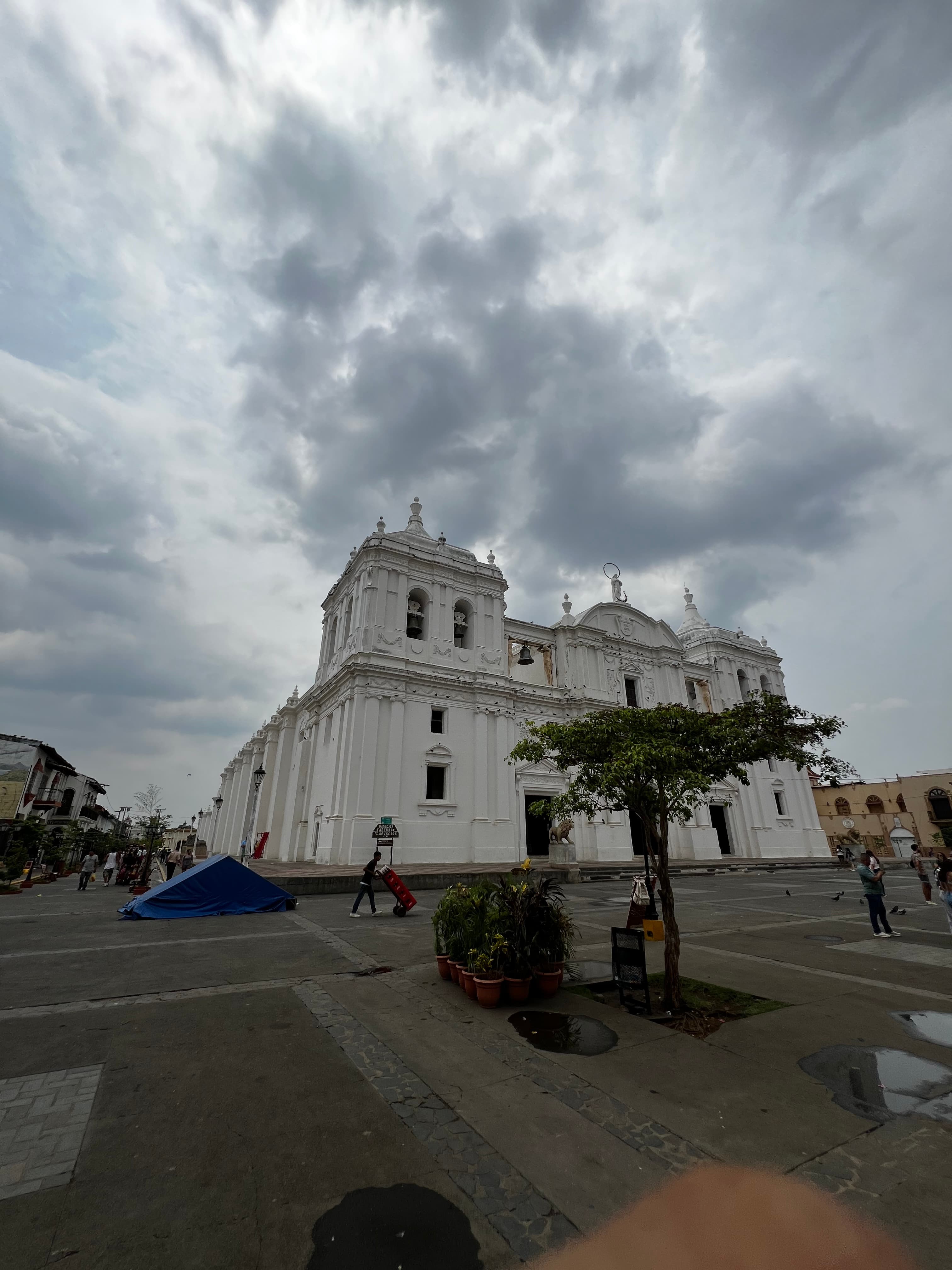
León is where it started, and its altars and churches are the reference. Our León colonial city tour lasts 5 hours, with the cathedral rooftop, the artisan market and a certified guide, from US$45 per person (groups of 4 to 6); US$80 solo. More on the city in our León destination page.
If you are staying on the Pacific side, the Granada + Masaya Volcano tour is a 9-hour private day from Rivas or San Juan del Sur, from US$45 per person (groups of 4 to 6); US$80 solo. Plan it for another day of the week and keep the night of December 7 free for the altars near your hotel. The area is on the Granada and Masaya page.
In Rivas the feast has a local twist: the city's official name is Villa de la Purísima Concepción de Rivas, per the Spanish-language Wikipedia, and the Policía Nacional report on the 2025 Purísima lists "Purísimas acuáticas" on December 8 in several departments, Rivas among them.
The Gritería also crosses the border. Teletica reported that in 2024 the Nicaraguan community in Cinco Esquinas de Tibás, in Costa Rica, planned its first one, with arroz a la valenciana on the table, and Delfino.cr quoted Tica Bus reporting a 50 percent rise in land trips to Nicaragua for the season.
Public celebrations in recent years
The format has changed. In November 2023 a parish in Managua announced that its Purísima procession would not go out into the streets and would be celebrated inside the church (EWTN News). In December 2023, AFP reported that most Catholic celebrations that year were restricted to the inside of churches. The Gritería in homes and neighborhoods continued, and the Policía Nacional reported providing security for the Purísimas of December 7 and 8, 2025. Ask close to the date what is planned where you will be. The wider calendar, with other changes, is in our guide to festivals in Nicaragua by month.
Tips for visitors
- Go with someone from the neighborhood. You are welcome to sing and receive the gift, but it is a religious celebration, not a party staged for visitors.
- Expect fireworks all day on December 7 and crowds in the evening.
- Read the official advice before a night out in crowds. The US State Department rates Nicaragua Level 3, "Reconsider Travel" (advisory of May 14, 2026, on travel.state.gov), and Canada asks travelers to "exercise a high degree of caution" (updated November 2, 2026, on travel.gc.ca); Canada also advises avoiding large gatherings during demonstrations and avoiding road travel at night. Our guide to Nicaragua travel advisories and what Monkeys does summarizes both.
- Carry a bag for the gifts and leave room in your plans for slow traffic that night.
- Crossing from Costa Rica that week, book ahead: Tica Bus reported 50 percent more land travel. Our Liberia to Nicaragua transfer takes 3 to 4 hours, from US$45 per person (groups of 4 to 6); US$80 solo, and the driver crosses Peñas Blancas with you. Border rules are in our Peñas Blancas guide.
What Monkeys does
Monkeys Travels & Tours is a private tour operator based in Rivas, founded in 2018 by Everth Palma, who was born and raised in Rivas.
- Private tours only. Your group is never combined with other travelers.
- Bilingual bilingual guides born in Rivas, in a private vehicle.
- Our tours are day departures, so the night of December 7 stays free for the altars near your hotel.
- Price and inclusions confirmed in writing. Free cancellation up to 48 hours before departure.
- WhatsApp +505 8506 1173, every day from 7:00 to 20:00, with answers in under an hour. Send your dates, the number of people and your hotel.
Questions we get every week
What do people shout at La Gritería?
Someone calls out '¿Quién causa tanta alegría?' (who causes so much joy?) and the crowd answers 'La Concepción de María' (the conception of Mary). Then the group sings to the Virgin at the altar and the hosts hand out a small gift, called la gorra or el brindis.
When is La Gritería?
On the night of December 7, starting around 6 p.m. It closes La Purísima, a season that runs from November 28 to December 8. December 8, the feast of the Immaculate Conception, is a national holiday in Nicaragua.
Where did La Gritería start?
In León, in 1857. Most accounts credit Monsignor Giordano Carranza, either for urging people to shout the question from house to house or for the crowd answering his question in unison. The custom of altars and gifts in León is older and is linked to the monks of a León convent.
What is the Gritería Chiquita?
A smaller Gritería held in León on August 14. It dates to August 14, 1947, when residents took the end of the ash fall from the Cerro Negro volcano as a miracle and Bishop Isidro Oviedo Reyes proposed a penitential act of thanks.
Sources
Every figure in this guide comes from one of these pages, checked on the date shown above.
- Voz de América, Nicaragua celebrated La Gritería (December 8, 2021)
- Denese Neu, The Story of La Purísima and La Gritería, Louisiana Folklife Program
- HipLatina, A primer on La Gritería (December 7, 2018)
- CEPAD, Nicaraguan holiday traditions
- Delfino.cr, land trips to Nicaragua up 50 percent for La Purísima (December 3, 2024)
- AFP via El Heraldo, Nicaraguans celebrate La Gritería (December 8, 2023)
- EWTN News (ACI Prensa), Purísima procession in a Managua parish will not go out (November 27, 2023)
- Policía Nacional de Nicaragua, results of the Gritería and Purísima 2025 plan (December 2025)
- ViaNica, Gritería Chiquita in León (August 13, 2010)
- Wikipedia, Cerro Negro (1947 eruption)
- Teletica, La Gritería in Cinco Esquinas de Tibás (December 6, 2024)
- Wikipedia en español, Rivas (Nicaragua)
- US Department of State, Nicaragua travel advisory (May 14, 2026)
- Government of Canada, travel advice for Nicaragua (November 2, 2026)