
In this guide
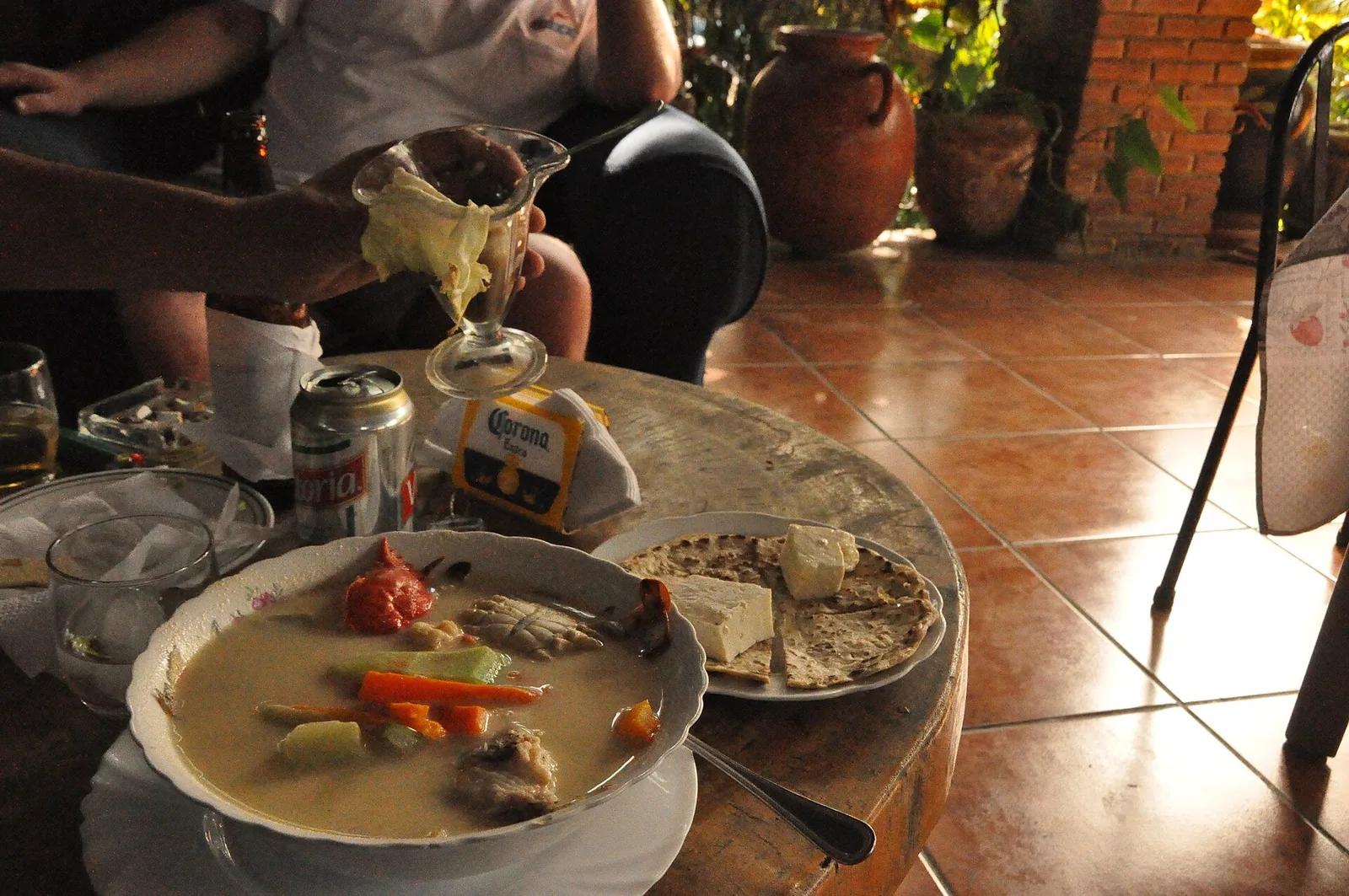
Nicaraguan food is built on corn, beans, plantain, yuca and pork. Gallo pinto comes with almost every meal, vigorón is the dish of Granada, nacatamal is the weekend dish, indio viejo is a corn stew with pre-Columbian roots, quesillo comes from León and vaho is the Sunday lunch. Monkeys Travels & Tours teaches four of them in a private cooking class, from US$45 per person (groups of 4 to 6); US$80 solo.
The dishes at a glance
| Dish | What it is | Where and when |
|---|---|---|
| Gallo pinto | Rice and small red beans fried with onion | Everywhere, at any meal |
| Vigorón | Boiled yuca, chicharrón and cabbage salad on a banana leaf | Granada, street stalls and parks |
| Nacatamal | Corn masa with pork, potato and rice, steamed in leaves | Weekends and holidays, with coffee |
| Indio viejo | Thick corn stew with shredded meat, tomato and achiote | Lunch; linked to Ometepe |
| Quesillo | Thick corn tortilla wrapped around soft cheese, pickled onion and cream | Nagarote and La Paz Centro, León highway |
| Vaho | Beef, green plantain and yuca cooked in banana leaves | Sunday lunch |
| Pinolillo | Cold corn drink | Everywhere |
Gallo pinto
Nicaraguan gallo pinto uses small red beans, called "red silk" beans, cooked with onion in vegetable oil and mixed with day-old rice so the grains stay separate, according to Wikipedia. It is eaten at any time of day, often with eggs, cheese, tortillas, sour cream and chilero, a pickled mix of onion, carrot and chili. The Spanish-language entry calls it the main side of the fritanga, the plates of Nicaraguan street food.
Costa Rica claims the dish as well. The origin is disputed, and the rivalry has a record: in 2003 Costa Rica cooked nearly 1,000 pounds of gallo pinto for the Guinness Book, and Nicaragua answered with 1,200 pounds. Both sides agree on Afro-Caribbean roots.
Vigorón, Granada's dish
Vigorón is boiled yuca topped with chicharrón (fried pork belly or pork rind) and curtido, a cabbage salad with tomato, onion and chili pickled in vinegar and salt. It is served on a banana leaf and often eaten without utensils.
Its origin is unusually precise. The historian Alejandro Barberena Pérez, in his book "Granada", dates it to 1914 and credits María Luisa Cisneros Lacayo, known as "La Loca", who named the dish after a poster for a tonic called Vigorón. EcuRed places it in the La Islita neighborhood and dates the book to 1970; Wikipedia gives 1971. Granada is the natural place to try it; our Granada + Masaya Volcano tour stops there for lunch, which is not included in the price.
Nacatamal
The nacatamal is a large parcel of seasoned corn masa filled with pork, potato, rice, onion, chiltoma (sweet pepper), tomato, garlic and chili, wrapped in plantain or banana leaves and cooked slowly. The name comes from the Nahuatl nacatl, meat, and tamalli, per the Spanish-language Wikipedia entry, which attributes the dish to the Nahua Nicarao people of western Nicaragua.
Families usually start on Friday so it is ready Saturday morning, and repeat on Saturday for Sunday. It is eaten on weekends and holidays such as Christmas, with coffee and bread.
Indio viejo, the dish with an Ometepe story
Indio viejo is a thick stew of corn masa with shredded meat, tomato, achiote, onion, garlic and herbs. Wikipedia calls it one of the oldest dishes in Nicaraguan cooking and says it is believed to have originated with the Nicarao people of Ometepe Island, who made it with deer, turkey or iguana before cattle and pigs arrived.
A 2025 paper by researchers at UNAN-León in the journal Universitas traces the name to a story about an Indigenous man on Ometepe and two Spanish travelers, and notes that today the dish is made mainly with beef or pork. Treat the name story as tradition, not documented history. Ometepe is in our department of Rivas, which makes indio viejo the dish with the closest link to where we are based.
Quesillo, León's roadside snack
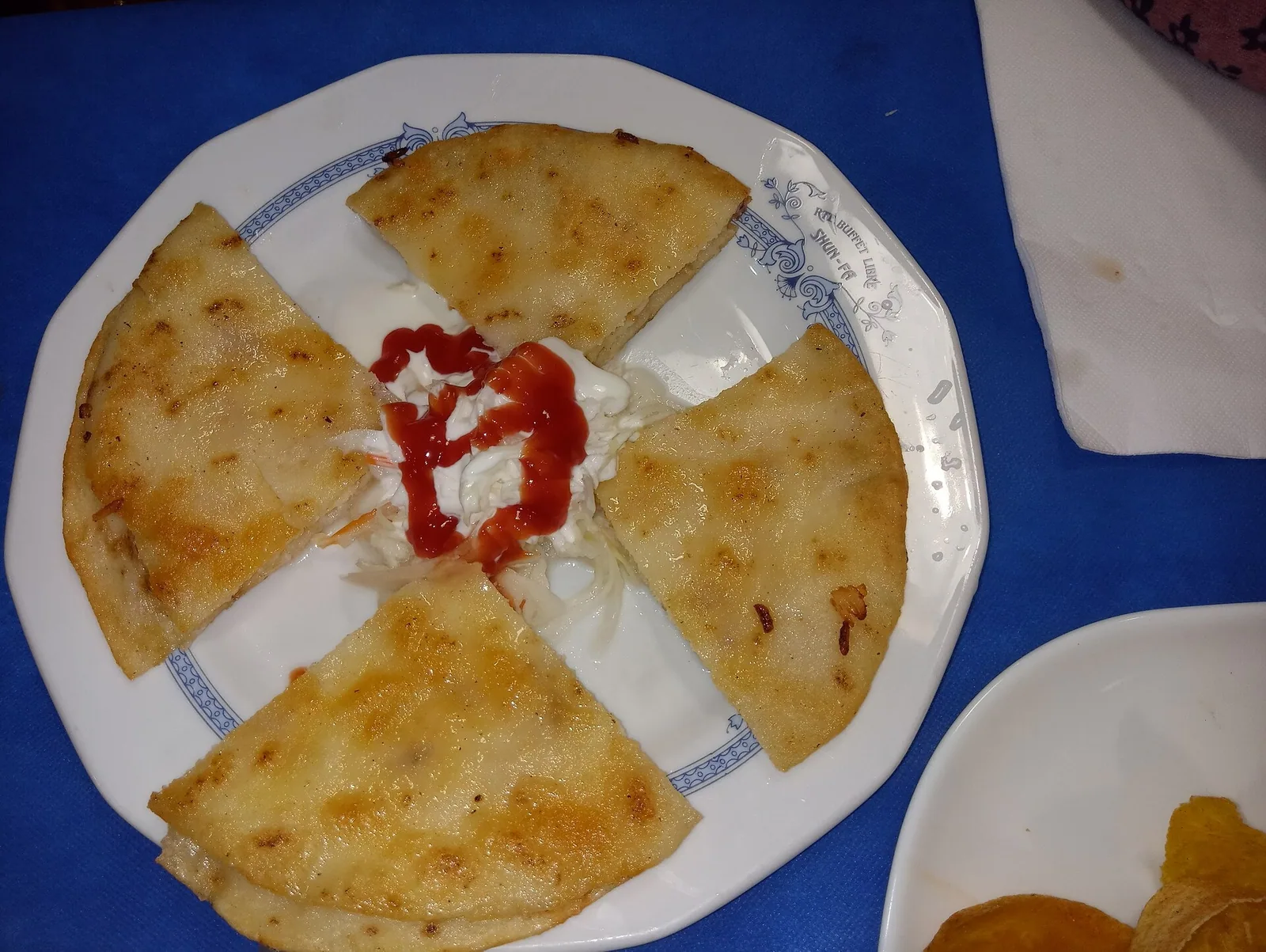
A quesillo is a thick corn tortilla wrapped around soft, stretchy cheese, finished with pickled onion and a sauce of sour cream or liquid cheese with vinegar. It is sold in a thin plastic bag; you bite off a corner and eat from the opening. The best-known stands are on the highway between León and Managua, and two towns, Nagarote and La Paz Centro, both claim to have invented it, per Wikipedia. La Paz Centro's version uses purple onion. If you book our León colonial city tour, tell your guide you want to try one.
Vaho, the Sunday lunch
Vaho (also spelled baho) is beef, usually brisket, cooked with green plantain and yuca in banana leaves for a long time and served on the leaves, with a cabbage and tomato salad dressed with vinegar and lime on top, according to Wikipedia. Some families make it as a Sunday meal and many restaurants serve it.
Drinks and regional plates
Corn is in the glass too. Pinolillo and chicha are corn drinks, and pinolillo is so common that Nicaraguans call themselves "pinoleros", per the Nicaraguan cuisine entry. The Spanish-language entry on Nicaraguan gastronomy adds regional names: sopa de mondongo from Masatepe, and on the Caribbean coast seafood dishes such as rondón, in a cooking that uses coconut milk and coconut oil.
What to eat in Rivas
Sources on Rivas cooking are thin, and we only repeat what we can cite. The Spanish-language Wikipedia page on Rivas singles out the "rosquillas de las piedras" as famous across the country, and the indio viejo story points to Ometepe. In practice, Rivas and San Juan del Sur eat the national plates above: gallo pinto with every meal, fritanga from street stands, vaho or nacatamal at the weekend.
Learn it in a cooking class
The Nicaraguan cooking class lasts 3 to 4 hours with a local host. You shop at the market, cook vigorón, nacatamal, gallo pinto and tres leches cake, and eat together. Included: the host, the market trip, all ingredients, the class, the shared meal, a recipe booklet and water. Not included: transport from the hotel (available on request), alcoholic drinks, tips and travel insurance.
| Group size | Price per person |
|---|---|
| 1 traveler | US$80 |
| 2 to 3 travelers | US$60 |
| 4 to 6 travelers | US$45 |
| 7 to 10 travelers | US$38 |
| 11 to 15 travelers | US$32 |
It pairs well with the Masaya artisan market tour, 3 to 4 hours, from US$30 per person (groups of 4 to 6); US$55 solo, or with a day in Granada. The Granada and Masaya destination page has the rest of the area, and our guide to the Masaya artisan market covers the market itself.
What Monkeys does
Monkeys Travels & Tours is a private tour operator based in Rivas, founded in 2018 by Everth Palma, who was born and raised in Rivas.
- Private tours only. Your group is never combined with other travelers.
- Bilingual bilingual guides born in Rivas, in a private vehicle.
- Lunch is not included unless the tour says so (the Granada + Masaya day, for example, has an optional lunch stop); we suggest places and you pay for what you order.
- Price and inclusions confirmed in writing. Free cancellation up to 48 hours before departure.
- WhatsApp +505 8506 1173, every day from 7:00 to 20:00, with answers in under an hour. For the cooking class, send the date, the number of people, any food allergies and your hotel.
Questions we get every week
What is the national dish of Nicaragua?
Gallo pinto, rice and small red beans fried with onion. It is eaten at any meal, often with eggs, cheese, tortillas and sour cream, and it is the side that comes with most fritanga plates. Costa Rica claims the dish too, and the origin is disputed.
What is vigorón and where is it from?
Boiled yuca topped with chicharrón and curtido, a cabbage, tomato, onion and chili salad pickled in vinegar and salt, served on a banana leaf. It comes from Granada: the historian Alejandro Barberena Pérez dates it to 1914 and credits María Luisa Cisneros Lacayo, who named it after a poster for a tonic called Vigorón.
What is the difference between a nacatamal and a tamal?
A nacatamal is a large corn masa parcel filled with pork, potato, rice, onion, sweet pepper, tomato and chili, wrapped in plantain or banana leaves. The name comes from the Nahuatl nacatl, meat, and tamalli. It is eaten on weekends and holidays, usually with coffee and bread.
Can I learn to cook Nicaraguan food on a tour?
Yes. The Monkeys Nicaraguan cooking class lasts 3 to 4 hours with a local host: market shopping, cooking vigorón, nacatamal, gallo pinto and tres leches cake, and a shared meal. It costs from US$45 per person (groups of 4 to 6); US$80 solo, with ingredients and a recipe booklet included.
Sources
Every figure in this guide comes from one of these pages, checked on the date shown above.
- Wikipedia, Nicaraguan cuisine
- Wikipedia, Gallo pinto
- Wikipedia en español, Gallo pinto
- Wikipedia, Vigorón
- EcuRed, receta del vigorón (origin in Granada, 1914)
- Wikipedia en español, Nacatamal
- Wikipedia, Indio viejo
- García-Guzmán, Oviedo-Martínez and Espinoza-Palma, Indio Viejo, Universitas (UNAN-León, published August 6, 2025)
- Wikipedia, Quesillo
- Wikipedia, Vaho
- Wikipedia en español, Gastronomía de Nicaragua
- Wikipedia en español, Rivas (Nicaragua)