
In this guide
A Laguna de Apoyo day trip pairs a crater lake about 175 meters deep, a natural reserve since 1991, with two nearby Pueblos Blancos towns: Catarina, with its viewpoint, and San Juan de Oriente, a village of potters. Monkeys Travels & Tours runs a black pottery workshop there from US$40 per person (groups of 4 to 6); US$70 solo.
This guide explains what the lagoon is, what the reserve rules mean for a visitor, how to get down to the water, and how to pair the viewpoint and the pottery with Masaya. It does not repeat the Granada and Masaya day; that is in our guide to Granada and Masaya in one day.
What Laguna de Apoyo is
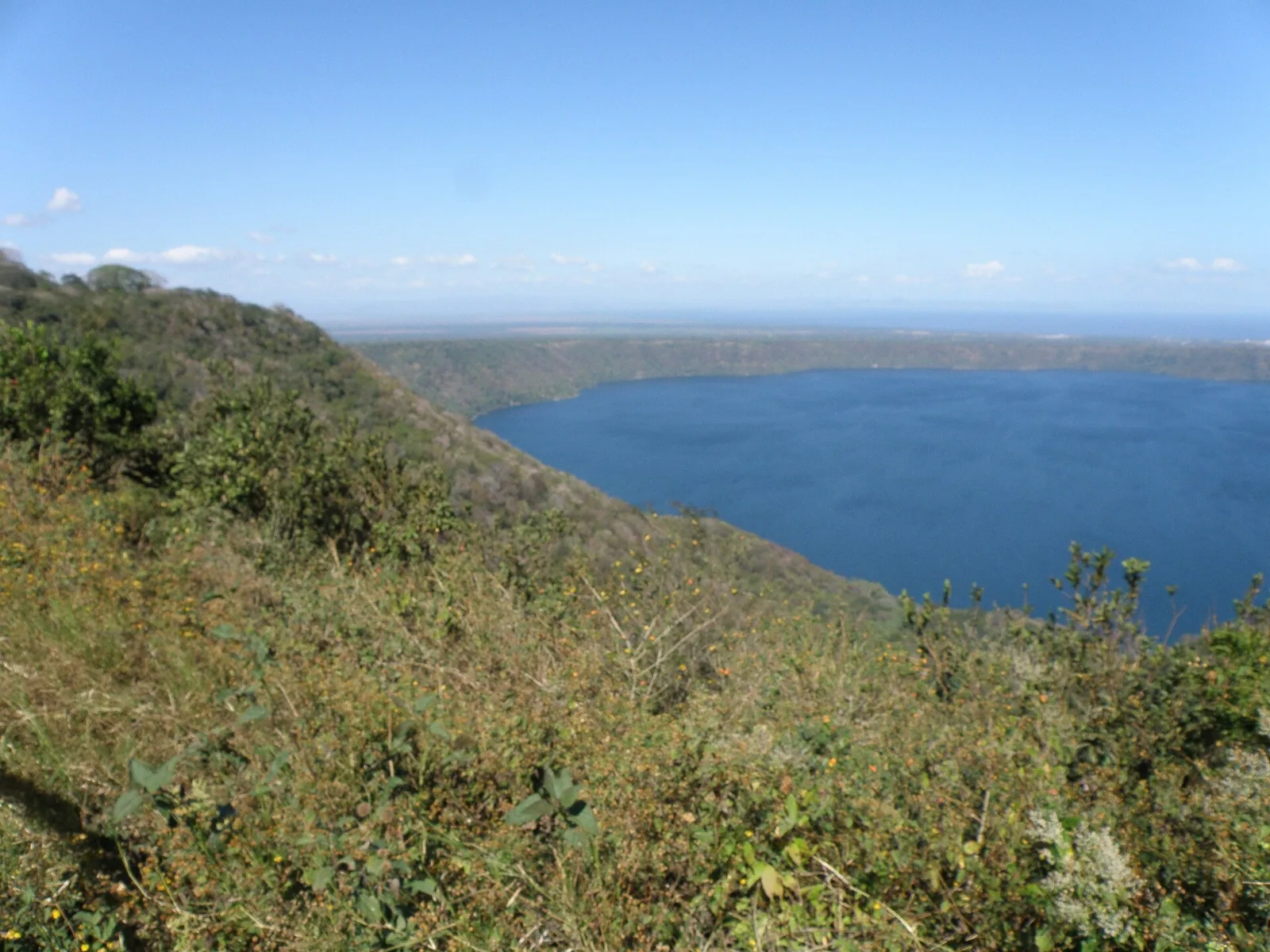
Laguna de Apoyo is a lake inside a volcanic crater, between the departments of Masaya and Granada. The crater formed about 23,000 years ago and measures roughly 6 km across. The lake covers about 19.44 km2.
The depth figure is where sources differ slightly. The Spanish Wikipedia article gives a maximum of 176 meters and attributes it to measurements by INETER, Nicaragua's geosciences institute; the English article says 175 meters. Wikivoyage adds a practical detail for swimmers: the bottom drops away very quickly from the shore, at close to 45 degrees.
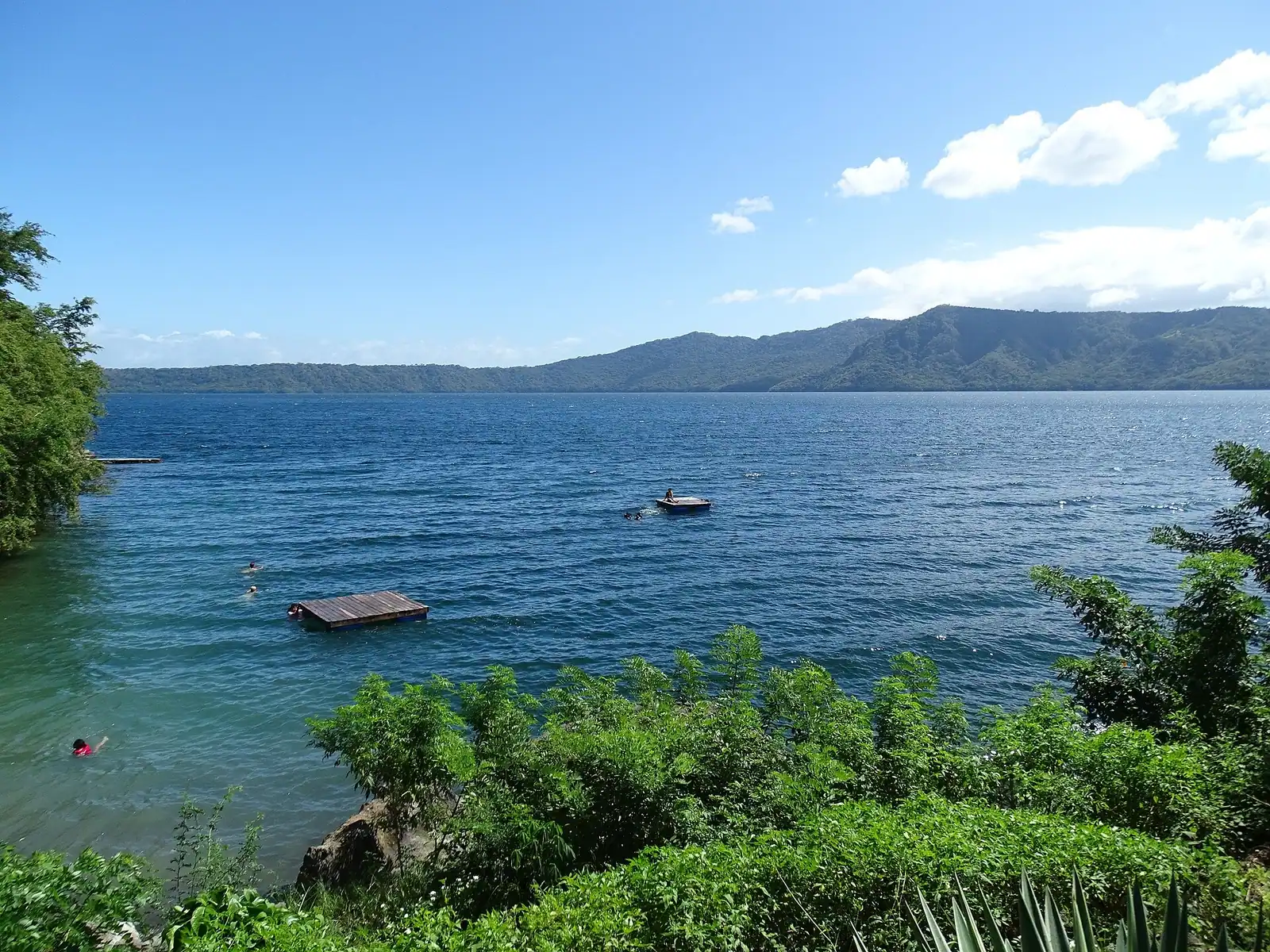
The water is warm, between 27 and 30 degrees Celsius. The lake is home to six endemic cichlid fish of the genus Amphilophus, found nowhere else. INETER measurements cited in Spanish sources show the water level has dropped about 6 meters over 20 years.
A protected reserve: what it means for visitors
Laguna de Apoyo was declared a protected area by Decree 42-91, published in La Gaceta on November 4, 1991. In 2010 MARENA, the Ministry of the Environment and Natural Resources, approved its protection and management plan (Resolución Ministerial 001-2010).
| Reserve data | Figure |
|---|---|
| Total area of the plan | 123.54 km2 |
| Protected area | 42.72 km2 |
| Buffer zone | 81.82 km2 |
| Municipalities | Masaya, Catarina and San Juan de Oriente (Masaya); Granada, Diriá and Diriomo (Granada) |
The plan lists 24 prohibitions, among them building on slopes steeper than 15 percent. For a day visitor the practical result is simple: you swim either from a hotel or hostel that sells day passes or from the public beach sections. Wikivoyage describes the public beach as littered and often crowded. Leave nothing behind.
How to get down to the water
The lagoon sits below the rim, so the road down is steep. Your options, according to Wikivoyage (checked November 3, 2026):
- Bus from Masaya. Three departures Monday to Saturday, around 6:00, 10:30 and 16:00, and two on Sunday. Fare C$20 as of 2026; the ride takes close to an hour. The schedule was listed as current in April 2026 and buses may run late.
- Taxi. About US$12 to 15 from Granada and no more than C$200 from Masaya.
- Hostel shuttle from Granada. Some hostels run a day-trip shuttle; schedules change often.
- Private vehicle. On a private Monkeys tour the same vehicle takes you between the rim and the shore.
Resorts on the shore charge non-guests a day-use fee, and many rent kayaks. Fees vary by place, so ask before you sit down.
The Catarina viewpoint
Catarina sits on the heights above the lagoon and is part of the Pueblos Blancos tourist corridor of Masaya. Visit Centroamérica lists the Mirador de Catarina as open from 8:00 to 22:00, with an entrance of C$20 for both locals and foreigners (C$100 for local buses, C$150 for tour buses). From the terraces you see Laguna de Apoyo below you and, on a clear day, Granada, the Mombacho volcano and Lake Cocibolca behind it.
That page is undated, so treat the fee as a guide and carry small córdoba bills.
San Juan de Oriente and its pottery
San Juan de Oriente is a small village near Masaya and one of the six municipalities of the Laguna de Apoyo reserve. For centuries, according to Rick Steves, the town's economy has been based on pottery.
What makes the visit worth it is seeing the process by hand. Rick Steves describes the workshop of potter Valentín López: clay pounded by bare feet, a stone wheel turned by foot, brushes made of hair and large seeds used to burnish the surface. A 2018 study from UNAN-Managua documents how the local designs inherit pre-Hispanic forms and decoration, and how the potters adapt them to today's market.
The Monkeys Black Pottery Workshop teaches the barro negro technique with a master artisan. It lasts 3 to 4 hours and includes private transport from Rivas, the workshop, a hands-on clay lesson, a fired piece to take home and water. Not included: additional pottery purchases, meals, tips and travel insurance.
| Group size | Pottery workshop, per person |
|---|---|
| 1 | US$70 |
| 2 to 3 | US$55 |
| 4 to 6 | US$40 |
| 7 to 10 | US$35 |
| 11 to 15 | US$30 |
How to put it together in one day
Catarina and San Juan de Oriente are both municipalities of the department of Masaya, so they combine well with the Masaya volcano and market.
- Pottery and viewpoint. The pottery workshop in the morning, then the Catarina viewpoint, then a few hours at the water.
- Volcano, market and viewpoint. The Masaya Volcano + Artisan Market tour, 6 hours, from US$45 per person (groups of 4 to 6); US$80 solo, with a stop at Catarina added on request.
- Market only. The Masaya Artisan Market & Folklore tour, 3 to 4 hours, from US$30 per person (groups of 4 to 6); US$55 solo, for buying pottery and hammocks in one place. More in our guide to the Masaya artisan market.
For combinations that are not a fixed tour, we send the plan and the price in writing on WhatsApp before you confirm.
What to bring
- Swimsuit, towel and sandals for the shore; the slope into the water is steep.
- Sunscreen and a hat. The rim and the shore are both exposed.
- Córdobas in small bills for the viewpoint, the day pass and pottery purchases. Our guide to money in Nicaragua explains cash and ATMs.
- A soft bag or newspaper to wrap pottery for the trip back.
What Monkeys does
Monkeys Travels & Tours is a private tour operator based in Rivas, founded in 2018 by Everth Palma, who was born and raised in Rivas.
- Every tour is private. Your group only, never combined with other travelers.
- Bilingual bilingual guides born in Rivas, in a private vehicle.
- The pottery workshop includes transport from Rivas, the lesson and a fired piece to take home.
- WhatsApp at +505 8506 1173, every day from 7:00 to 20:00, with answers in under an hour. Send the date, the number of people, your hotel and which stops you want.
- Written confirmation of price and inclusions. Free cancellation up to 48 hours before departure.
Questions we get every week
How deep is Laguna de Apoyo?
About 175 to 176 meters at its deepest point. The Spanish Wikipedia article attributes 176 m to measurements by INETER; the English article gives 175 m. The lake fills a crater about 6 km across that formed some 23,000 years ago, and the water is between 27 and 30 degrees Celsius.
Is Laguna de Apoyo a protected area?
Yes. It was declared a natural reserve by Decree 42-91, published on November 4, 1991, and MARENA approved its protection and management plan in 2010. The plan covers 123.54 km2, with 42.72 km2 of protected area and 81.82 km2 of buffer zone across six municipalities of Masaya and Granada.
How much is the entrance to the Catarina viewpoint?
Visit Centroamérica lists C$20 per person for both locals and foreigners, with the viewpoint open from 8:00 to 22:00. The page is undated, so take some córdobas in small bills and expect the figure may have changed.
Can I take a pottery class in San Juan de Oriente?
Yes. The Monkeys Black Pottery Workshop lasts 3 to 4 hours and includes private transport from Rivas, a workshop with a master potter, a hands-on clay lesson and a fired piece to take home, from US$40 per person (groups of 4 to 6); US$70 solo.
Can I combine Laguna de Apoyo with the Masaya volcano?
Yes. The Monkeys Masaya Volcano + Artisan Market tour lasts 6 hours, from US$45 per person (groups of 4 to 6); US$80 solo. Tell us on WhatsApp that you want the Catarina viewpoint over Laguna de Apoyo on the same day and we confirm the plan and price in writing.
Sources
Every figure in this guide comes from one of these pages, checked on the date shown above.
- Wikipedia, Apoyo Lagoon Natural Reserve
- Wikipedia en español, Laguna de Apoyo (depth measured by INETER)
- MARENA, Resolución Ministerial 001-2010, management plan of the Laguna de Apoyo reserve (La Gaceta, March 19, 2010)
- Wikivoyage, Laguna de Apoyo (bus schedule as of April 2026)
- Visit Centroamérica, Catarina Viewpoint
- Rick Steves, Nicaragua's wheel of fortune
- Torreón Universitario (UNAN-Managua), Moldeando identidad en los talleres alfareros de San Juan de Oriente (2018)