
In this guide
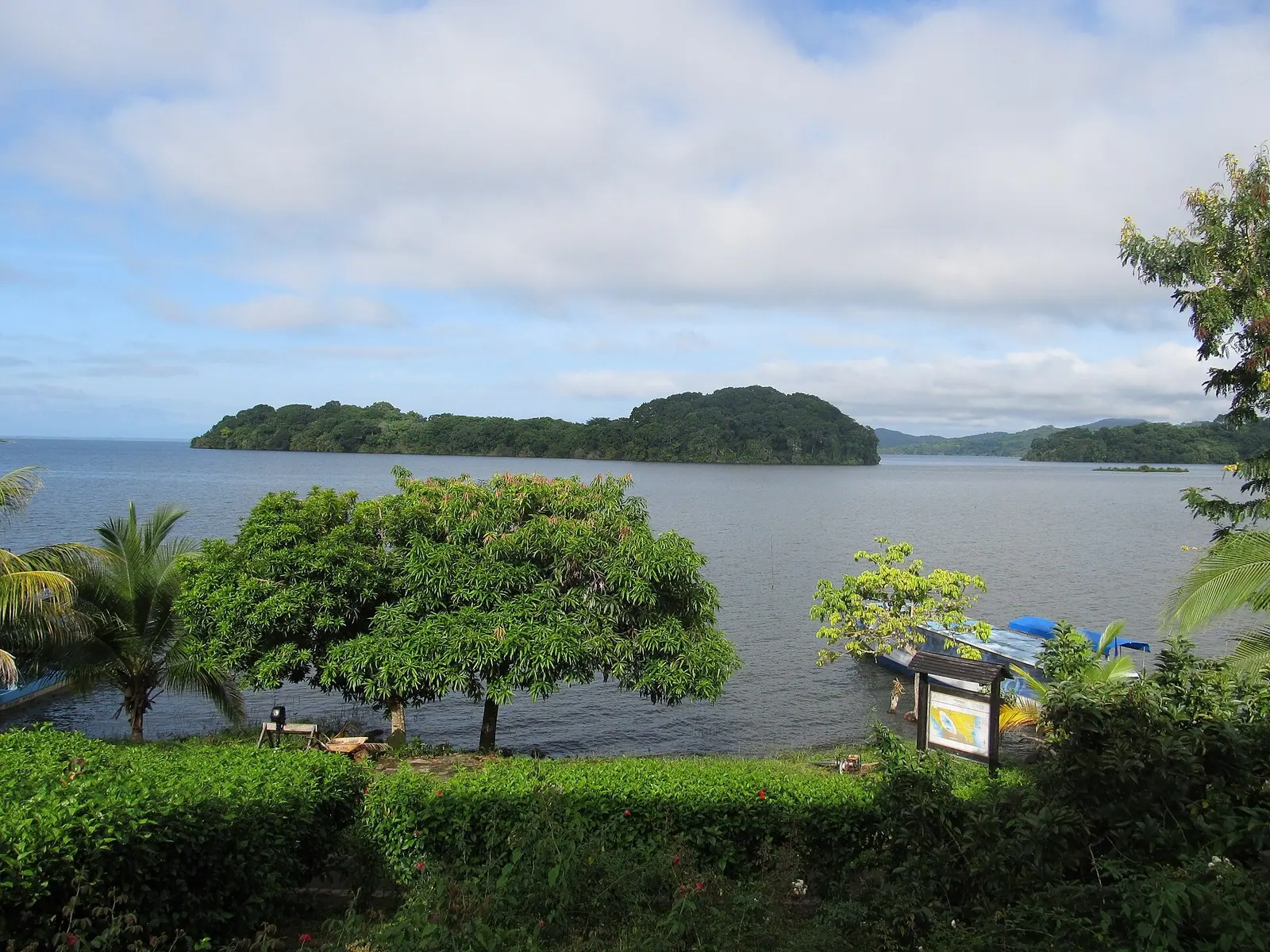
The Solentiname islands are an archipelago of 36 islands and islets in the southeast of Lake Cocibolca, reached by boat from San Carlos in about three hours. They are known for the primitivist painting that grew out of Ernesto Cardenal's community in the 1960s. Monkeys Travels & Tours runs a private 2 to 3 day trip from US$95 per person (groups of 4 to 6); US$170 solo.
The archipelago in numbers
Visit Centroamérica, the regional tourism site of the Central American Integration System, describes 36 volcanic islands and islets over 190 km², rising from 30 to 250 m above sea level, protected as a National Monument. Four islands are large: from west to east, Mancarroncito, Mancarrón, San Fernando and La Venada, per Wikipedia. Wikivoyage counts five inhabited islands, and Wikipedia puts the population under 1,000.
Wikipedia lists 76 bird species, including parrots and toucans, and about 46 fish species. La Venada takes its name from the deer that live there. Solentiname belongs to the department of Río San Juan, on the same lake as Ometepe.
Ernesto Cardenal and the painters
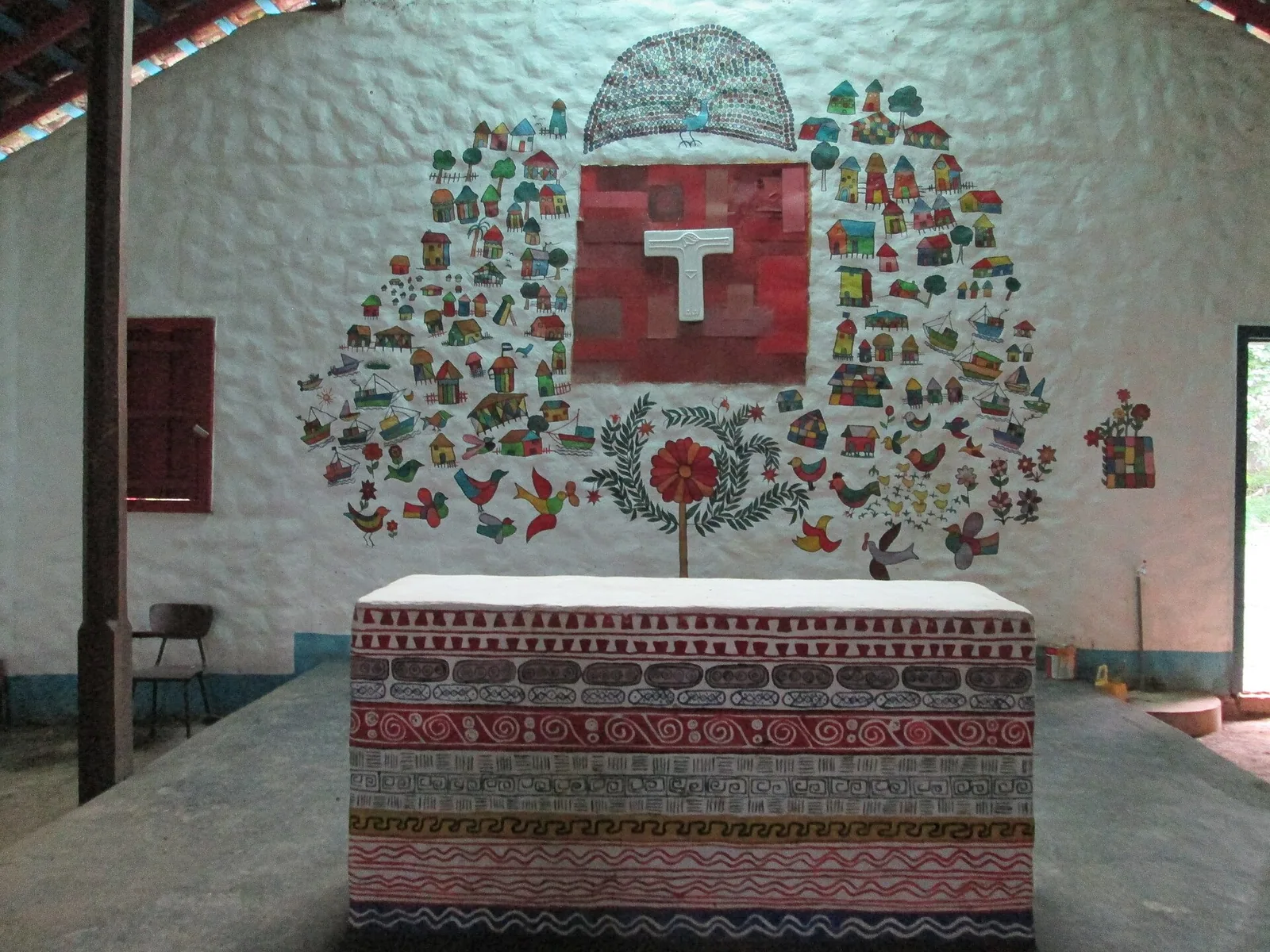
Ernesto Cardenal, poet and priest, was born in Granada on 20 January 1925. He settled on the islands in the mid-1960s: Wikipedia's article on him and a 2018 Hyperallergic piece give 1965, while the Solentiname article gives 1966. He founded a small Christian community of mostly peasant families, where Bible readings in the chapel were followed by open discussion among the participants, per Hyperallergic. Cardenal wrote The Gospel in Solentiname there.
The painting started when Cardenal brought the painter Róger Pérez de la Rocha to the islands. According to a 2017 Confidencial report, he held his first workshop in the church and wanted the students to keep their naive way of looking, so he taught them to paint the life around them rather than academic technique. Eduardo Arana, a farmer, made the first sketches that became the first primitivist canvases of Solentiname. Rodolfo Arellano and his wife, Elba Jiménez, were among the first painters Cardenal encouraged.
The community was raided and burned in 1977 and Cardenal went into exile in Costa Rica, per Wikipedia. Painting continued on the islands. Cardenal died in Managua on 1 March 2020 and, at his request, his remains were buried in Solentiname.
What to see on the islands
| Island | What is there |
|---|---|
| Mancarrón | The church of Nuestra Señora de Solentiname built by Cardenal (Wikivoyage), a museum with pre-Columbian pieces (Visit Centroamérica), painted wooden figures (Confidencial), lodging and a small shop |
| La Venada | About fifteen painters with home workshops, per Confidencial in 2017 |
| San Fernando | Lodging and a museum with pre-Columbian pieces (Visit Centroamérica) |
| The lake | Petroglyphs, birds and kayaking (Visit Centroamérica) |
Many of the paintings set Gospel scenes in the landscape of Solentiname, per Hyperallergic, and others portray the local wildlife, per Confidencial. Painters sell from their homes, and the 2017 report notes that prices are negotiable. On Mancarrón, craftspeople carve small toucans, herons, fish and peacocks from soft wood and paint them in the same style.
How to get there from Rivas
- Road to San Carlos. San Carlos sits at the southeast end of the lake. Wikivoyage describes the road through Juigalpa as the only significant road in the region and gives about 6 hours by bus from Managua. From Rivas you drive north first. We do not publish a door-to-door time.
- Boat from San Carlos. Visit Centroamérica gives about three hours from the San Carlos dock by public panga or tourist boat. Public schedules are thin and the sources disagree: Wikivoyage's Solentiname page lists departures from San Carlos on Tuesday and Friday at 13:00, returning at 4:30 in the morning on the same days, while its San Carlos page gives a different time. Private boats can be chartered for around US$100 a day, per Wikivoyage (checked November 3, 2026).
- Between islands. By boat, with your guide or your lodge.
Wikivoyage notes that the boat between Ometepe and San Carlos appears to be permanently cancelled, so Ometepe and Solentiname, though on the same lake, are not linked by a public route today.
The Monkeys Solentiname trip
| Item | Detail |
|---|---|
| Duration | 2 to 3 days |
| Included | Private transport to San Carlos, boat on the lake, local guide, visits to art galleries, water |
| Lodging | Included in the multi-day price |
| Not included | Meals, tips, travel insurance, paintings and crafts you buy |
| Difficulty | Easy |
| Group | Price per person |
|---|---|
| 1 person | US$170 |
| 2 to 3 | US$130 |
| 4 to 6 | US$95 |
| 7 to 10 | US$80 |
| 11 to 15 | US$70 |
| 16 or more | Quoted on request |
Since you are already in San Carlos, the Río San Juan and El Castillo fit well on the same trip; see our Río San Juan, El Castillo and Indio Maíz guide and the Indio Maíz tour, from US$85 per person (groups of 4 to 6); US$150 solo. For both in one itinerary, ask for a custom private package, quoted on request.
Practical notes
San Carlos has banks and ATMs, per Wikivoyage; on the islands Wikivoyage lists only a small store on Mancarrón, so bring cash from the mainland. Wikivoyage also says pollution is a bigger concern than wildlife for swimming in the lake. Wear clothes that can get wet on the boat.
On safety, the Government of Canada advice updated on 2 November 2026 keeps Nicaragua at "exercise a high degree of caution" and notes that good medical care is limited outside Managua; the United States keeps Level 3, "Reconsider Travel", in its advisory of 14 May 2026. Read our travel advisories guide before you book a remote trip.
What Monkeys does
Monkeys Travels & Tours is a private tour operator based in Rivas, founded in 2018 by Everth Palma, who was born and raised in Rivas.
- Private trip: your group only, never combined with other travelers.
- Bilingual bilingual guides born in Rivas, in a private vehicle.
- Boat to the islands, local guide and gallery visits included; lodging included on multi-day trips.
- Price and inclusions confirmed in writing. Free cancellation up to 48 hours before departure.
- WhatsApp +505 8506 1173, every day from 7:00 to 20:00, answers in under an hour. Send your dates, the number of people and your hotel in Rivas or San Juan del Sur.
Questions we get every week
How do you get to the Solentiname islands?
By road to San Carlos, at the southeast end of Lake Cocibolca, and then by boat. Visit Centroamérica gives about three hours from the San Carlos dock by public panga or tourist boat. Public boats run only a few days a week, so most visitors hire a private boat or go with a tour.
What is Solentiname famous for?
For its primitivist painting. Painters on the islands, trained in workshops led by Róger Pérez de la Rocha in the community that the poet and priest Ernesto Cardenal founded in the mid-1960s, paint the islands and their wildlife, and often set Gospel scenes in that landscape. Mancarrón also has carved and painted wooden figures.
How many days do I need for Solentiname?
At least two. The trip from Rivas to San Carlos is long and boats to the islands are slow and infrequent. Our Solentiname Archipelago tour is 2 to 3 days, from US$95 per person (groups of 4 to 6); US$170 solo, with lodging included.
Can I buy paintings directly from the artists?
Yes. A 2017 Confidencial report describes painters on La Venada selling from their homes and workshops, with prices that are negotiable. Paintings and crafts you buy are not included in the tour price.
Sources
Every figure in this guide comes from one of these pages, checked on the date shown above.
- Visit Centroamérica (SICA), Solentiname
- Wikipedia, Solentiname Islands
- Wikivoyage, Solentiname (boats, church, lodging)
- Wikivoyage, San Carlos, Nicaragua (boats to Solentiname)
- Confidencial, The rural artists of Solentiname, Nicaragua, by Carlos Salinas Maldonado (16 March 2017)
- Hyperallergic, The art of liberation in a utopian Nicaraguan community, by Silvia Benedetti (8 February 2018)
- Wikipedia, Ernesto Cardenal
- Wikivoyage, Río San Juan region (road to San Carlos)
- Government of Canada, travel advice for Nicaragua (updated 2 November 2026)
- US Department of State, Nicaragua travel advisory (14 May 2026)