

In this guide
At night, Masaya Volcano National Park shows you the glow of the Santiago crater from the Plaza de Oviedo, for five minutes and with whatever gas is blowing that day. You do not see an open lava lake: according to La Prensa (August 4, 2025) it remains buried under the rock from the 2024 collapses. The night session starts at 16:30 and entry costs US$10 for foreigners. From November to April, the dry season, the sky helps; the volcano does what it wants.
Monkeys Travels & Tours runs the Masaya Volcano night tour from Rivas, San Juan del Sur or Granada, from US$55 per person in groups of 4 to 6. This guide says what to expect, with the 2025 and 2026 sources we were able to open on November 5, 2026.
What you see today and what you do not
What the sources publish, in date order:
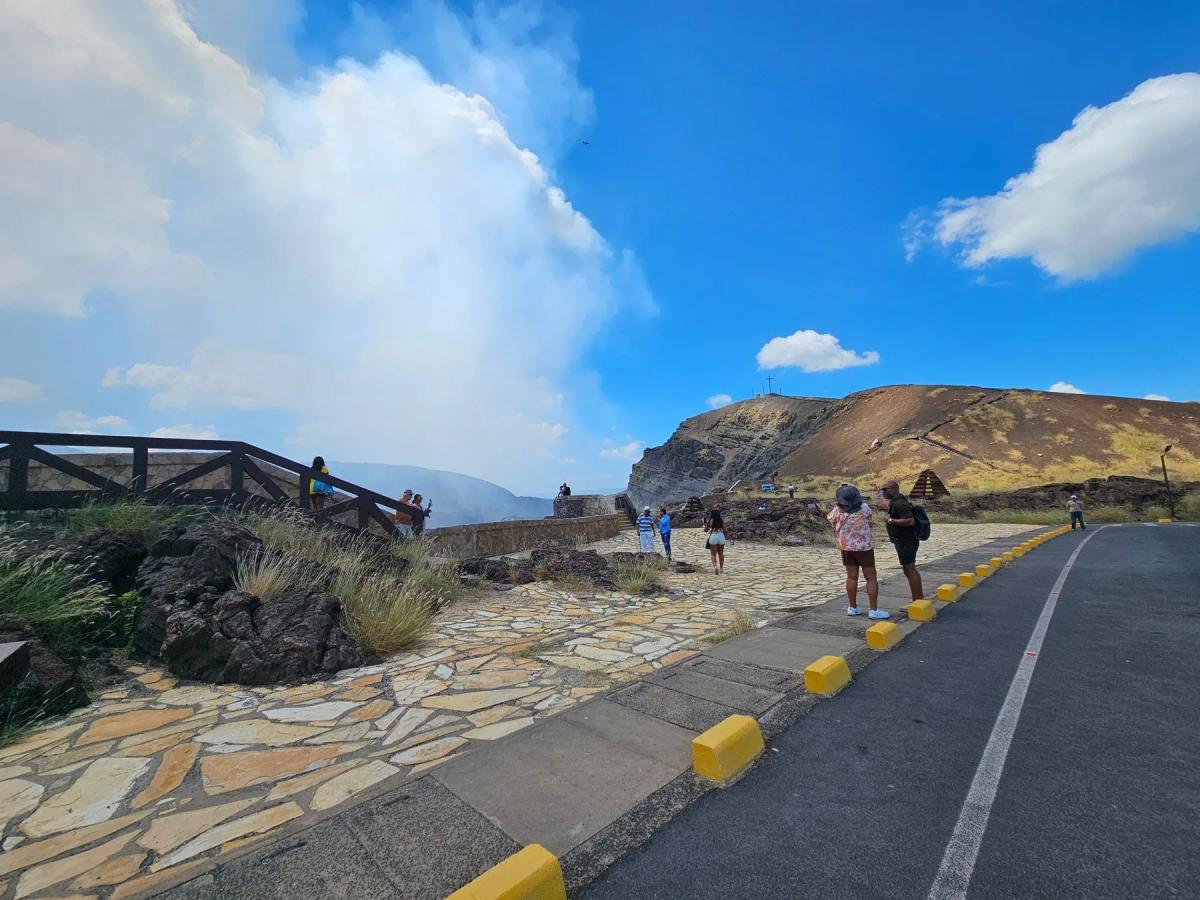
- February and March 2024. Collapses on the walls of the Santiago crater covered the lava lake. The park closed the viewpoint for more than a year.
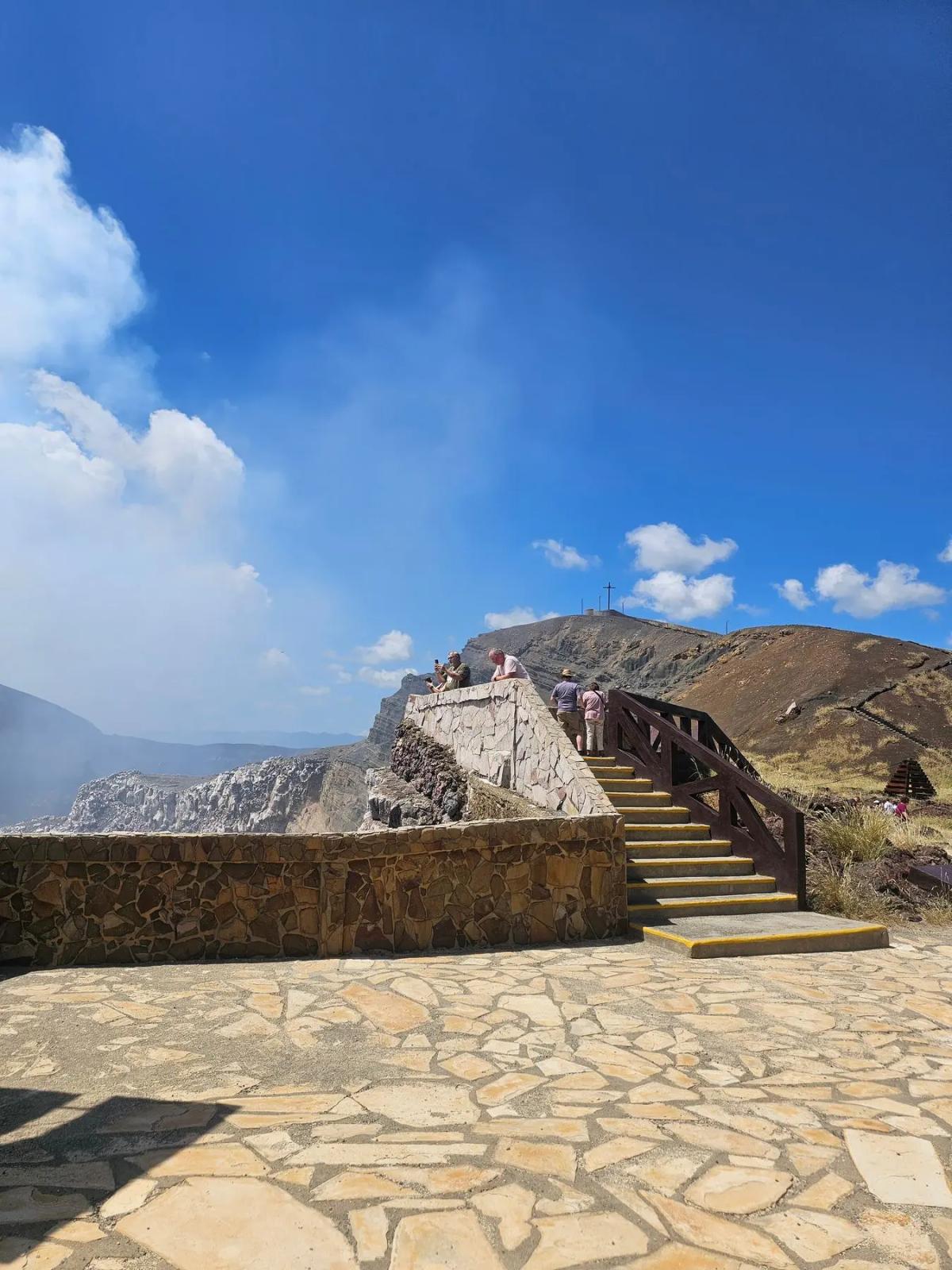
- July 18, 2025. The park reopened the viewpoint and the Plaza de Oviedo with a five-minute limit "under safety rules and protocols", according to El 19 Digital (July 24, 2025). Visitors that week said they managed to see glow in the Santiago crater (El 19 Digital, July 27, 2025).
- August 4, 2025. La Prensa: the Santiago crater's lava lake "remains buried under the rocks that fell after last year's collapses", and "a strong emission of gas persists".
- November 29, 2025. An explosion in the crater spread ash over communities in Ticuantepe, according to Nicaragua Investiga (December 1, 2025).
- March 2026. A swarm of more than 20 earthquakes, the largest magnitude 3.4, between the San Fernando crater and the Masaya lagoon. INETER said it posed no danger to nearby residents (Confidencial, March 20, 2026). TN8 published hours and tours that same month, which means the park stayed open.
- July 2026. Sally Sees: "there definitely seems to be that iconic red lava glow at night" and "Nobody knows for sure when the lava lake will become fully visible again". The park was open and night tours were running.
- October 2026. The Global Volcanism Program's weekly report, reproduced by The Watchers, logged diffuse ash plumes on October 9, 2026, visible on satellite and webcams. None of the 2026 reports mentions a visible lava lake.
Our reading: expect a red glow at the bottom of the crater, more visible the darker it gets, gas, the smell of sulfur and five minutes on the clock. If the gas blows toward the viewpoint, the rangers shorten or close the visit. We do not promise lava.
Hours and fees with dates
| Session | Hours | Foreigners | Nicaraguans | Source |
|---|---|---|---|---|
| Day | 8:30 to 16:30 | US$5 or C$180 | C$80 | TN8 (March 29, 2026); El 19 Digital (July 27, 2025); Sally Sees (July 30, 2026) |
| Night | from 16:30; closing at 19:30 per TN8, at 20:00 per El 19 Digital and Sally Sees | US$10 or C$370 | US$5 or C$185 | TN8 (March 29, 2026); El 19 Digital (July 27, 2025); Sally Sees (July 30, 2026) |
The night tour, according to the park guide quoted by TN8, includes the museum, the fumaroles, the sunset and then the glow in the Santiago crater. The five-minute limit at the rim applies day and night. El Salvador.com, citing MARENA, reported on August 17, 2026 that the park received 84,556 visits in the first half of 2026, 44,900 of them foreigners, and that it operates Monday to Sunday from 8:30 to 19:00.
There is no official MARENA table online dated 2026. That is why we confirm the hours by phone the day before and write them into your confirmation.
Why the dry season helps
The Pacific dry season runs from November to April. INETER, quoted by La Prensa on October 26, 2026, placed the end of the 2026 rainy season "in late October and early November" and announced stronger winds for November. Fewer clouds mean clear sunsets from the Plaza de Oviedo and a dark sky for the glow.
Wind cuts both ways. Some days it clears the gas from the viewpoint, other days it pushes it there. INETER describes Masaya as a persistently degassing volcano; La Prensa spoke in 2025 of a strong emission of gas. The park decides every afternoon. Our guide to the best time to visit Nicaragua has the full calendar.
How the night goes with Monkeys
- Pickup in Rivas, San Juan del Sur or Granada in the mid afternoon, with the exact time in your written confirmation.
- Entry to the park on the night session, with the museum and the rangers' briefing.
- Sunset from the Plaza de Oviedo and, once dark, the five minutes facing the Santiago crater.
- Return. The tour lasts 4 to 5 hours.
From US$55 per person in groups of 4 to 6; US$95 solo; groups of 2 to 3, US$70 per person. Includes a private vehicle, a bilingual guide, night entry fee and water. Dinner and tips are not included. Free cancellation up to 48 hours before. If the park closes that day, we tell you before leaving and move the date or refund you.
If you prefer the crater by day together with Granada, the Granada and Masaya Volcano tour runs from US$45 per person and the itinerary is in Granada and Masaya in one day.
What to bring
- Long sleeves or a light jacket: in November and December the wind at the rim is noticeable.
- Closed shoes. The ground is ash and rock.
- A small flashlight for the parking area; at the viewpoint you do not need one.
- A scarf or mask if sulfur irritates your throat. If you have asthma, ask your doctor before booking.
- Water, included in the tour, and a light dinner before leaving.
- A camera with night mode. Flash does nothing for the glow and bothers everyone else.
The full packing list for the country is in what to pack for Nicaragua.
Questions we get every week
Can you see lava at Masaya Volcano at night?
You see a glow, not an open lava lake. La Prensa wrote on August 4, 2025 that the Santiago crater's lava lake remains buried under the rock from the 2024 collapses. Visitors in July 2025 (El 19 Digital) and July 2026 (Sally Sees) describe a red glow at night. We found no 2026 source confirming a visible lake.
What are the night hours at Masaya Volcano?
According to a park guide quoted by TN8 on March 29, 2026, the night visit runs from 16:30 to 19:30. El 19 Digital published an 20:00 close in July 2025 and Sally Sees reported the same in July 2026. Time at the crater rim is five minutes. We confirm the day before.
How much is the night entry fee at Masaya Volcano?
US$10 for foreigners and US$5 for Nicaraguans, or 370 and 185 córdobas, according to El 19 Digital in July 2025; Sally Sees confirmed US$10 (370 córdobas) in July 2026. On the Monkeys night tour the fee is included.
Why go in the dry season?
Fewer clouds and less rain between November and April. INETER, quoted by La Prensa on October 26, 2026, placed the end of the rainy season between late October and early November, with stronger winds in November. Wind can also push the crater gas around; the park decides each day whether the viewpoint opens.
Sources
Every figure in this guide comes from one of these pages, checked on the date shown above.
- TN8, Masaya Volcano, a destination that invites visitors (day and night hours), March 29, 2026
- El 19 Digital, tourists enjoy the Santiago crater again (hours and fees), July 27, 2025
- El 19 Digital, the park reopens the viewpoint and Plaza de Oviedo, July 24, 2025
- La Prensa, Santiago crater viewpoint open with new restrictions, August 4, 2025
- Sally Sees, seeing lava at Masaya Volcano National Park, July 30, 2026
- Confidencial, Masaya Volcano registers growing seismic activity, March 20, 2026
- Nicaragua Investiga, crater explosion spreads ash over nearby communities, December 1, 2025
- The Watchers, weekly volcanic activity report, October 8 to 14, 2026
- La Prensa, INETER announces the end of the rainy season, October 26, 2026
- INETER, Masaya volcano description
- El Salvador.com, Masaya Volcano received 84,556 visits in the first half of 2026, August 17, 2026