
In this guide
Pack light, quick-dry clothes, closed shoes with grip for the volcanoes, a rain jacket from May to October and repellent with at least 20% DEET. Nicaragua uses type A and B plugs at 120 V, like the United States. Leave the drone and the vape at home: both are banned. Extras for the Monkeys Ometepe and La Flor tours are below.
The short list
| Category | What to bring | Why |
|---|---|---|
| Clothes | Light, quick-dry shirts and trousers; one long-sleeved layer | Heat on the Pacific side, wind on the beaches at night, sun on the volcanoes |
| Rain | Light rain jacket from May to October | Afternoon showers in the rainy season |
| Feet | Hiking shoes or boots with grip; sandals with a strap | Volcano trails, boats, uneven paths |
| Health | Repellent with 20% DEET or more; sunscreen SPF 15 or higher; small first aid kit | CDC recommendations for Nicaragua |
| Power | A plug adapter only if your devices use something other than types A and B | 120 V, 60 Hz |
| Light | A headlamp with a red-light mode | Night tours and turtle beaches |
| Water | A reusable bottle, 2 liters or more on hike days | Long volcano days |
| Do not pack | Drones, e-cigarettes | Prohibited in Nicaragua |
Plugs and voltage in Nicaragua
Nicaragua uses plug types A and B (two flat pins, with or without a round ground pin) at 120 V and 60 Hz, according to Wikipedia's table of mains electricity by country. The same table lists types A and B for Canada, Mexico and Costa Rica, so travelers from those countries need no adapter.
Spain uses types C and F at 230 V and 50 Hz. If you come from Spain or most of Europe, pack an adapter and check the label on each charger: if it reads 100 to 240 V, it works with an adapter alone; if it reads 230 V only, it needs a voltage converter. Hair dryers and straighteners are the usual problem.
Drones, vapes and what customs will not let in
Drones. The Government of Canada, in advice updated on November 2, 2026, says drones are strictly prohibited in Nicaragua and that non-compliance may result in charges, including criminal charges. The UK adds that possession and use of drones is prohibited and that Law 1230, introduced in December 2024, requires people in possession of drones to hand them in to the authorities. Do not bring one, not even switched off in your luggage.
E-cigarettes. The UK states that electronic smoking devices such as e-cigarettes are banned and that customs officials can confiscate them at the border.
The rest of the list (night-vision equipment, animal products, cash above the declaration limit) is in our guide to the Peñas Blancas border crossing from Liberia, together with passport and entry requirements. We do not repeat it here.
Clothes for heat and rain
Nicaragua has two seasons. Responsible Travel describes the dry months as November to April and the wet season as May to October, with the Pacific side drier than the Caribbean. In the rainy months, afternoon showers usually last an hour or two, and its rainfall chart shows October, June and September as the wettest. The Central Highlands are cooler, especially in the evenings.
What that means for your bag:
- November to April: light clothes, a hat, sunscreen. A long-sleeved layer for evenings in the north or windy nights on the coast.
- May to October: the same, plus a light rain jacket and a dry bag for your phone. Plan hikes and boat rides for the morning.
- Any month: quick-dry fabrics. Cotton stays wet in the humidity.
Our guide to the best time to visit Nicaragua has the month-by-month detail.
What to wear for volcano hikes
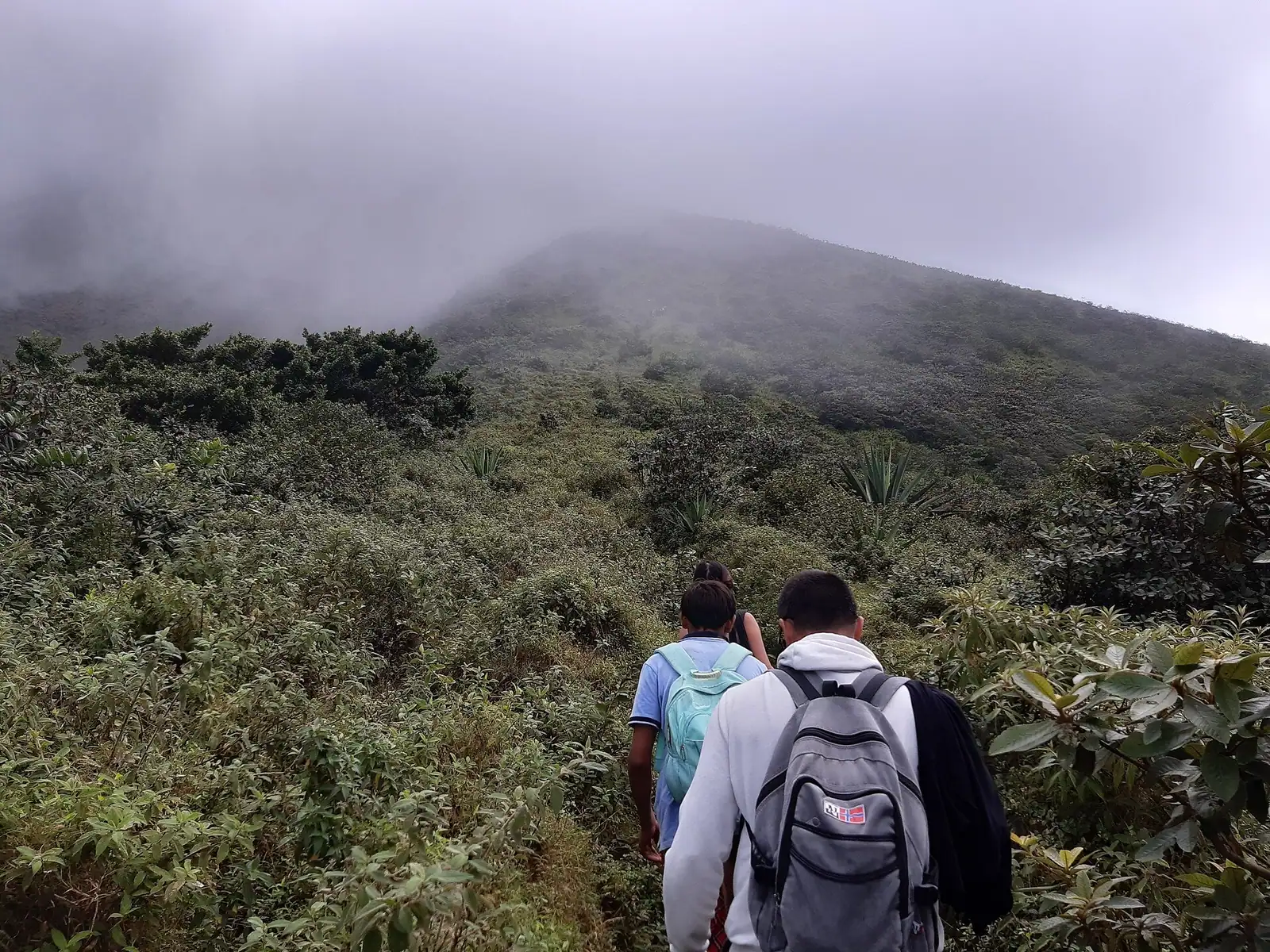
The volcanoes are where packing matters most. On Ometepe, Wikivoyage warns that hikers often reach the top of Concepción inside cloud, says to bring more than 2 liters of water, and notes that good shoes go without saying.
For the Concepción summit hike, 8 to 10 hours to the top at 1,610 m, from US$75 per person (groups of 4 to 6); US$130 solo:
- Hiking boots or trail shoes with deep grip. Not running shoes with worn soles.
- Long, light trousers. They protect against vegetation and rock.
- A windproof or rain layer. The summit is often in cloud, so expect it to feel cooler and wetter than the base.
- Water, 2 liters or more, and snacks. Meals are not included in our prices.
- A change of clothes and a small towel for the ride back.
For the easier Ometepe Island Full Day, from US$55 per person (groups of 4 to 6); US$95 solo, closed shoes or strapped sandals for the lower slopes of Concepción and a swimsuit for the Ojo de Agua pools are enough. The Masaya Volcano Night Tour, 4 to 5 hours from US$55 per person (groups of 4 to 6); US$95 solo, needs nothing special: comfortable shoes and a light jacket for the evening.
Repellent, sun and health
The CDC lists dengue, Zika and chikungunya as mosquito-borne risks in Nicaragua and reports an outbreak of chikungunya, for which it recommends a vaccine for travelers to outbreak areas. Its repellent advice:
- DEET at 20% or more for protection that lasts several hours.
- For mosquitoes only, picaridin, IR3535, oil of lemon eucalyptus (OLE or PMD) or 2-undecanone.
- Sunscreen with SPF 15 or higher, and a basic first aid kit for outdoor activities.
On malaria, the CDC lists transmission in the two Caribbean autonomous regions (RAAN and RAAS) and none in Managua. If your trip includes the Caribbean side, talk to your doctor about prophylaxis before you travel.
Two tour-specific notes. On the La Flor Sea Turtle Night Tour, an evening tour from US$45 per person (groups of 4 to 6); US$80 solo, bring a headlamp with a red mode and repellent, and leave the camera flash off; our La Flor turtle season guide explains the rangers' rules on light. On boats and beaches, a hat and a long-sleeved shirt save you more sunscreen than you think.
Phone, money and documents
Three things that are not clothes but still go in the bag:
- An unlocked phone and a charger. A local SIM is cheap; see our guide to the Nicaragua SIM card and mobile data.
- Clean US dollars and some córdobas. Damaged bills can be rejected; see money in Nicaragua.
- Your passport and printed bookings. Entry requirements are in the Peñas Blancas guide.
When you book, write to us on WhatsApp at +505 8506 1173 with the date, the number of people and your hotel, and ask what to bring for that specific tour. We confirm inclusions in writing.
What Monkeys does
Monkeys Travels & Tours is a private tour operator based in Rivas, founded in 2018 by Everth Palma, who was born and raised in Rivas.
- Private tours, never combined with other travelers.
- Bilingual bilingual guides born in Rivas, in a private vehicle.
- Price and inclusions confirmed in writing, so you know what to bring and what is covered.
- WhatsApp +505 8506 1173, every day from 7:00 to 20:00, with answers in under an hour.
- Free cancellation up to 48 hours before, useful if the forecast changes your hike day.
- Not included: meals, tips and travel insurance.
Questions we get every week
What plug type does Nicaragua use?
Types A and B, the flat two-pin and three-pin plugs used in the United States, Canada, Mexico and Costa Rica, at 120 V and 60 Hz. Travelers from Spain and most of Europe (types C and F, 230 V) need an adapter and should check that their chargers accept 120 V.
Can I bring a drone to Nicaragua?
No. The Government of Canada says drones are strictly prohibited and that bringing one may lead to charges, including criminal charges. The UK notes that Law 1230 of December 2024 requires anyone in possession of a drone to hand it in to the authorities. Leave it at home.
What should I wear to hike the Concepción volcano?
Hiking boots or shoes with grip, long trousers, a light layer for the summit, which Wikivoyage says is often inside cloud, and more than 2 liters of water. Our Concepción summit hike takes 8 to 10 hours, so bring a change of clothes for the ride back.
Do I need insect repellent in Nicaragua?
Yes. The CDC lists dengue, Zika and chikungunya in Nicaragua and reports a chikungunya outbreak. It recommends repellent with 20% or more DEET, or picaridin, IR3535 or oil of lemon eucalyptus, plus sunscreen of SPF 15 or higher.
Can I bring a vape or e-cigarette to Nicaragua?
No. The UK states that Nicaragua bans electronic smoking devices such as e-cigarettes and that customs can confiscate them at the border.
Sources
Every figure in this guide comes from one of these pages, checked on the date shown above.
- Government of Canada, travel advice for Nicaragua (November 2, 2026)
- UK FCDO, Nicaragua safety and security (drones, Law 1230)
- UK FCDO, Nicaragua entry requirements (e-cigarettes)
- Wikipedia, mains electricity by country
- CDC, Travelers' Health, Nicaragua
- Responsible Travel, best time to visit Nicaragua
- Wikivoyage, Isla de Ometepe (volcano hikes)